
STAR ANISE FORM GUIDE

Whole or Broken Star Anise: How to Choose

Choose whole stars when the star is seen, counted or removed, and broken star anise for grinding, blending and extraction. In the Yulin market, a grade-1 whole lot has more than 80% open stars, no black or mouldy fruit and no more than 1.5% broken lobes, stems and impurities.

By Fu Yang Updated

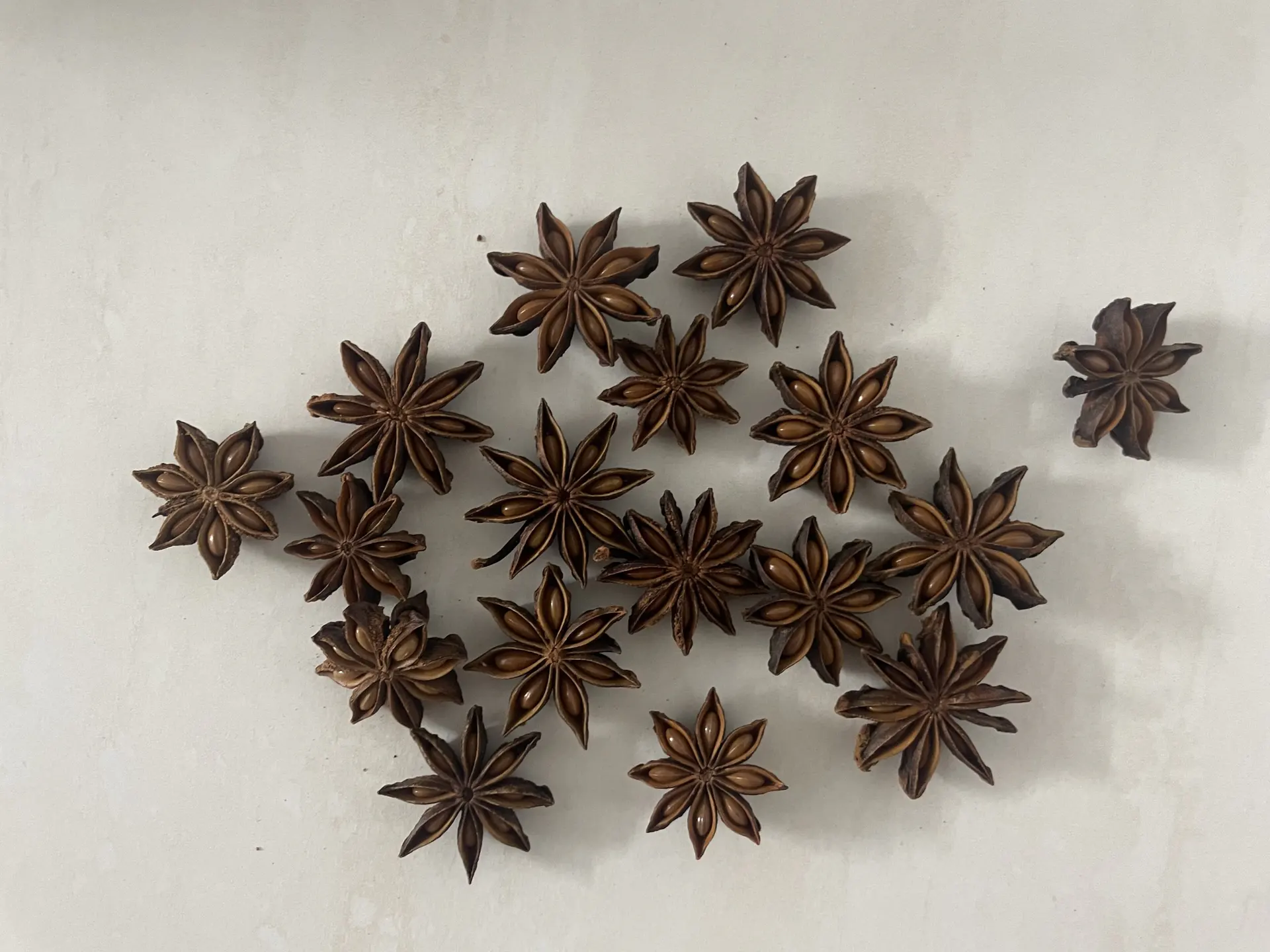
Whole star anise pods arranged on a plain background

PRACTICAL TIPS

Choose the active form from the intended use

Choose the active form from the intended use
FormWhat to specifyTypical fit
Whole star anise, grade 1More than 80% open stars; no more than 1.5% broken lobes, stems and impurities; no black or mouldy fruit. China's forestry grading for Dahong allows up to 850 stars per kilo.Repacking, foodservice, infusion and any use where the whole star is seen.
Whole star anise, bulkMore than 60% open stars, mixed sizes, no obviously defective fruit.Stocks, braising and seasoning production where looks matter less.
Broken star anisePiece-size range, fines and stem limits, moisture, cleanliness and SO₂.Grinding, blending, spice bags and extraction.
Branch fruit and scorched fruitFruit that fell and dried on the ground, or was dried with too much heat: shrivelled or black, with an impure or burnt smell.Oil extraction and low-grade powder only, not whole or broken food-grade supply.
Processed forms on requestRequired form, specification, testing, packing and intended use.Assessed only after a qualified processing route and commercial basis are agreed.

What “grade 1” means in practice

Yulin traders grade whole star anise on four things: how many stars are open, how full the lobes are, how much broken material, stem and dust is present, and whether any fruit is black or mouldy. Grade-1 autumn Dahong is more than 80% open with no more than 1.5% broken lobes, stems and impurities. Bulk is more than 60% open, with mixed sizes.

China's forestry-industry grading for Dahong sets grade 1 at no more than 850 stars per kilo, up to 6% broken tips, up to 0.5% impurities, up to 12.5% moisture and at least 7.5 mL/100 g of volatile oil; grade 2 runs from 850 to 1,200 stars per kilo. Vietnamese exporters sell autumn AAA at 2.5 cm across or more, with up to 5% broken, 1% impurities, 13.5% moisture and at least 8% volatile oil. When you compare offers, compare these numbers, not the grade names.

Where broken star anise comes from

Screening and hand selection for whole grades separate out lobes that have snapped off and stars that broke during drying and handling. Graded and cleaned, these become broken star anise. They come from the same fruit, so the aroma is the same kind. What changes is the look, a slightly lower oil figure (our reference is at least 7 mL/100 g, against 7.5 for whole stars) and faster aroma loss once the bag is open.

Cheap broken lots can also contain branch fruit, which fell and dried on the ground and smells impure. Smell the sample: clean and sweet is what you are paying for.

Four checks you can do on a sample

These are the checks Kun and Chuangui make first at our Yulin desk. They catch most problems before anything is spent on testing.

Squeeze

Take a handful and let go. Dry fruit is crisp and prickly and does not stick together; soft, pliable fruit is still damp.

Smell

Break a star and smell deeply. It should be clean and sweet. A sour or chemical note suggests sulphur, a burnt note over-drying and a musty note mould.

Chew

A small piece should finish sweet, without bitterness or harshness.

Weigh a litre

Guangxi autumn fruit weighs about 280–300 g per litre, and spring fruit at least 20 g less. Light, thin fruit usually means less oil.

QUICK CHECK

Before requesting a representative sample

  • Intended use
  • Whole or broken form
  • Crop: autumn (Dahong) or spring
  • Share of open stars, size or piece range
  • Moisture, cleanliness and SO₂ limits
  • Packing, quantity and destination

Powder, extract, oil and other processed forms are assessed separately through qualified processing partners after the specification and terms are agreed.

BUYER QUESTIONS

Frequently asked questions

How many stars are in a kilo?

China's grade-1 Dahong allows up to 850 per kilo, and grade 2 from 850 to 1,200. If the count matters for your pack, count a weighed sample and put the number in your specification.

Is broken star anise lower quality?

Not in the kind of aroma, because it comes from the same fruit, but it is sold on piece size and cleanliness rather than looks. Our reference volatile oil is at least 7 mL/100 g for broken star anise, against 7.5 for whole stars.

How can I check that a sample is properly dry?

Squeeze a handful and let go: dry star anise is crisp and prickly and does not stick. The laboratory moisture result, 12% maximum in our reference, confirms it.

Can I get star anise powder?

Yes, through a qualified processing partner, once the mesh, microbiology, packing and terms are agreed. Powder cannot be graded by eye, so the grade of the fruit that goes into the mill matters most.