
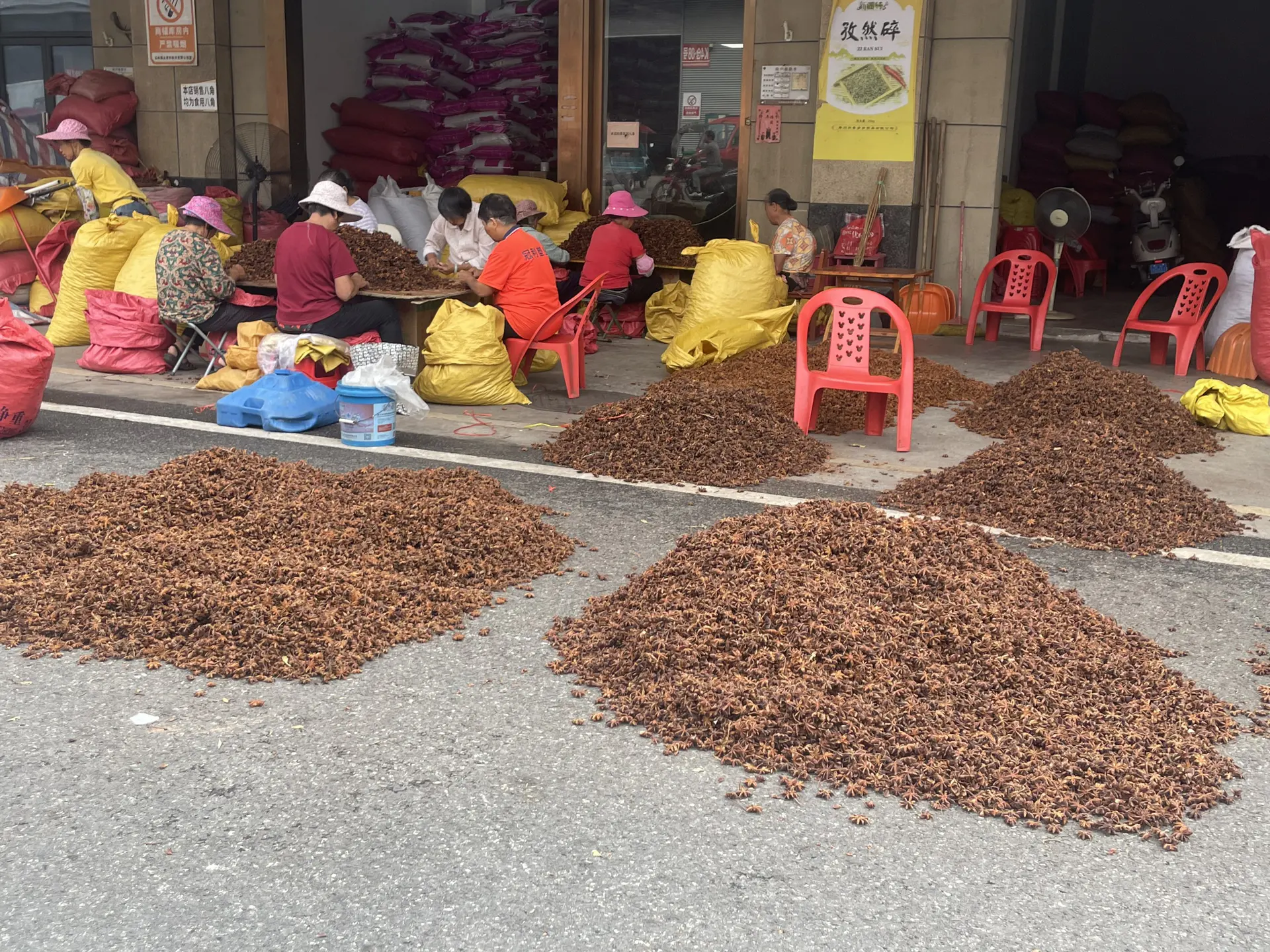
Guangxi's star anise trees carry two crops a year. The autumn fruit grows through the long, sunny summer, so it fills out: the lobes are wider and thicker, more of the stars open, and the fruit holds more anise oil. The face turns yellow-brown and the back dark brown, with natural variation from star to star.
The spring fruit develops through a shorter, cloudier and wetter season. It comes out smaller and thinner, with narrow lobes, fewer open stars, more twigs, less oil, a woodier smell and less sweetness. Wet weather also makes it hard to dry, which is why sulphur-treated spring lots are common in the market. Sulphur dries fruit faster and makes it look brighter, but it can leave sulphur dioxide residues and a sharp, sour smell that food importers in Europe, the United States and the Middle East turn away.