
CHINESE CASSIA BUYER GUIDE

Chinese Cassia: Choose the Right Form

Choose Chinese cassia by what you will do with it: bark sheets for processing, rolls or sticks for whole-piece presentation, cuts for infusion or blends, and powder for direct formulation. Then select the supply format and confirm the measurable specification. Minimum order: 500 kg.

By Fu Yang Updated

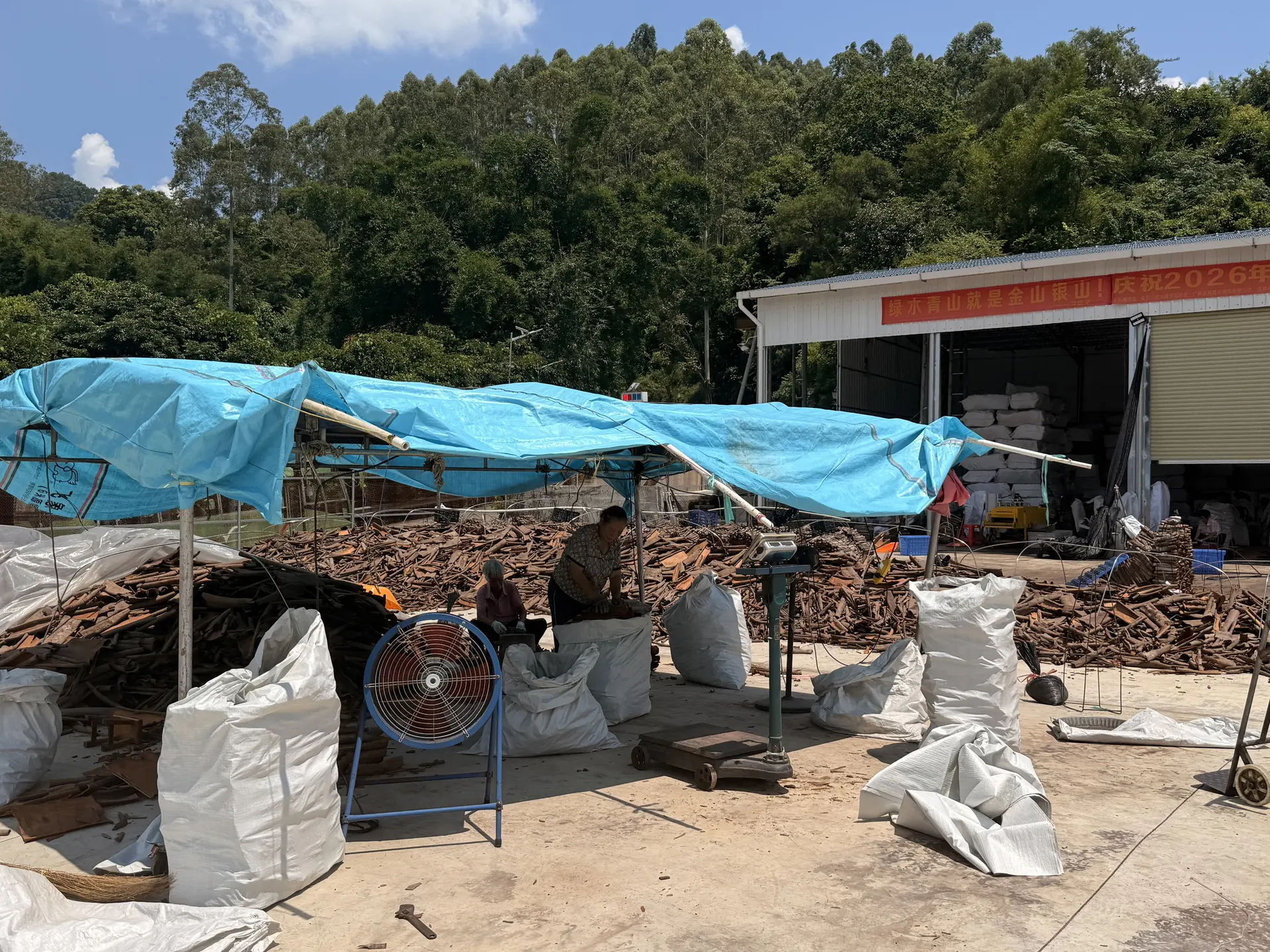
Chinese cassia being sorted and prepared at a processing site in China

PRACTICAL TIPS

Which Chinese cassia form fits your use?

Which Chinese cassia form fits your use?
FormBest starting pointConfirm before ordering
Bark Sheets & StripsCutting, grinding, extraction or repacking.Length, width, thickness and natural or scraped surface.
Sticks & RollsWhole-piece presentation, foodservice packs and spice blends.Length, diameter, bark thickness and surface preparation.
Chips & CutsInfusions, blends, grinding and portion packing.Bark or twig, cut size and size distribution.
Bark PowderBaking, beverages, seasoning and food formulation.Mesh or aperture, sieve standard and percentage passing.

1. Choose the material and form

Chinese cassia (Cinnamomum cassia, also traded as Chinese cinnamon) is different from Ceylon cinnamon (Cinnamomum verum). Within Chinese cassia, sheets, rolls, bark cuts, twig sections and powder describe different plant parts or preparations—not different botanical species.

Start with the intended use. Keep bark cuts separate from twig sections: a twig section has a woody core, while a bark cut is a piece of bark. Natural or scraped describes surface preparation; it does not by itself prove a quality grade.

2. Choose the supply format

Bulk / Processing supply is prepared for further cutting, grinding, extraction or repacking. Retail & Foodservice supply is business-to-business supply in an agreed unit pack for wholesalers, shops, cafés, hotels, restaurants or bakeries. It is not direct-to-consumer retail.

Not every cassia form is offered in both formats. Use the product directory to see the formats currently offered for each form.

3. Confirm the specification

Define dimensions or particle size, surface preparation, selection, treatment, intended use, destination and required tests. For powder, state the mesh or sieve aperture, the sieve standard and the percentage required to pass; finer does not automatically mean better.

The minimum order is 500 kg. Packing, labels, sample records and lot evidence are agreed for the order. Use the Quality Control page for the shared processing, packing and evidence approach instead of treating a photograph as a test result.

Season, tree age and bark thickness

About 70% of Chinese cassia is stripped in spring, from March to May and mainly in April, when the bark peels easily but is thinner, wetter and slightly lower in oil. The autumn strip in August and September is harder work but gives thicker, oilier bark, which trades about 15–20% higher. Fangchenggang and Qinzhou start in late March, Yulin and Wuzhou in mid-April, and Baise and Yunnan in late April or May.

Tree age matters as much as season. Seed-grown trees are stripped from 8–10 years and usually felled at 10–15; grafted dwarf trees can be harvested at 5–7 years but give thinner bark with less oil. Thickness in millimetres is therefore the most useful single number to put in a specification.

Scraped bark and oil cassia

Scraping removes the grey outer cork by hand. It costs 15–20% of the bark's weight plus the labour, so scraped forms are usually quoted 20–30% above natural ones. It changes the look, not the tree the bark came from.

Purple-oil cassia (you gui) is a different grade: bark from mature trees of 15–20 years, mainly in the Fangcheng area, 4–6 mm thick and heavy, with an oily purple cut surface and a sweet, lingering taste. It trades at 80–150% above ordinary cassia. If you need it, name it in your enquiry.

QUICK CHECK

A useful Cassia RFQ in six points

  • Chinese cassia form and plant part
  • Intended use and destination country
  • Dimensions, cut size or powder sieve requirement
  • Surface preparation, selection and treatment
  • Bulk / Processing or Retail & Foodservice supply
  • Packing, tests and quantity (500 kg minimum)

A product photograph helps confirm appearance, but it does not establish a laboratory value, certification or lot result. Connect the final order to an agreed specification and identified sample or lot.

BUYER QUESTIONS

Frequently asked questions

Is Chinese cassia the same as Ceylon cinnamon?

No. Chinese cassia is Cinnamomum cassia; Ceylon cinnamon is Cinnamomum verum. Confirm the botanical identity in the product specification.

Are bark cuts and twig sections interchangeable?

No. Bark cuts are pieces of bark. Twig sections contain a woody core surrounded by bark. Specify the plant part as well as the cut size.

Does scraped cassia automatically mean a higher grade?

No. Scraping removes the outer cork for appearance and costs 15–20% of the bark's weight, which is why scraped forms are quoted higher. The grade itself comes from thickness, oil, cleanliness and drying.

What should I send for a comparable quotation?

Send the product form, intended use, destination, dimensions or particle size, treatment and testing needs, supply format, packing and quantity. The minimum order is 500 kg.

Is spring or autumn bark better?

Autumn bark is thicker and oilier and trades about 15–20% higher. Spring bark, about 70% of the crop, is thinner and wetter but plentiful. Either can meet a specification, so state the minimum thickness and volatile oil you need.