Commercial grade
Broken Star Anise — product sheet
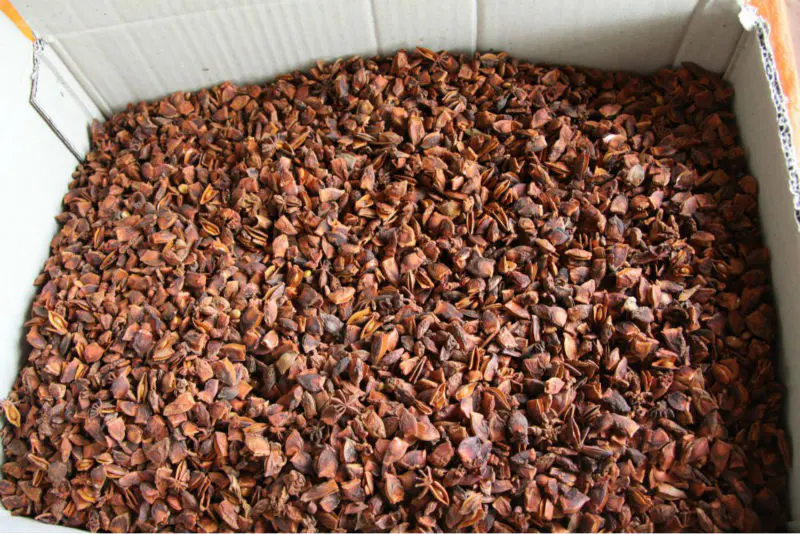
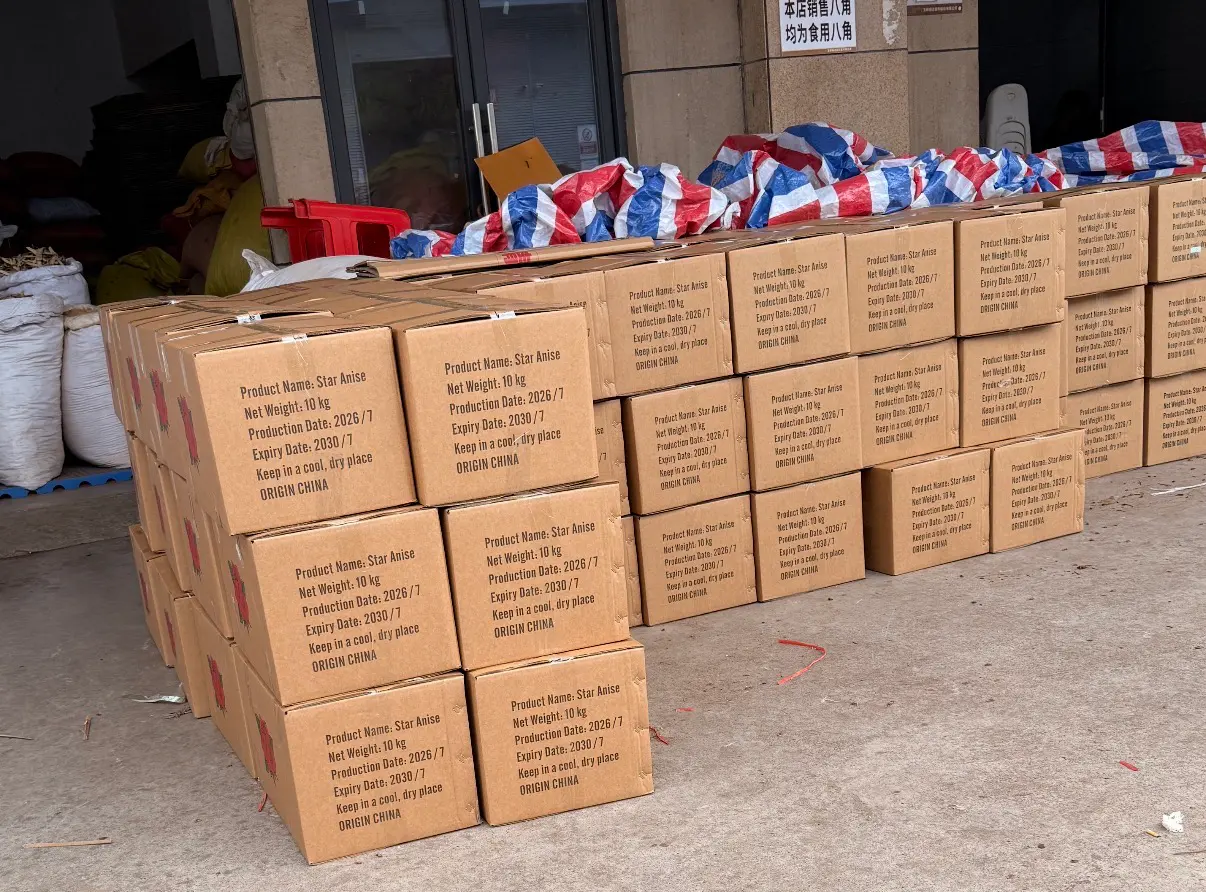
Broken star anise for export grinding, blending and further processing.
Public reference specification
Public reference specification | Parameter | Published reference | How to verify |
|---|
| Colour | Brown to maroon | Check and record against the agreed specification |
|---|
| Moisture | max 12 % | Request a laboratory test tied to the identified sample or lot |
|---|
| Foreign matter | max 0.5 % | Check and record against the agreed specification |
|---|
| Visible mould | None | Check and record against the agreed specification |
|---|
| Total ash, dry basis | max 4 % | Request a laboratory test tied to the identified sample or lot |
|---|
| Acid-insoluble ash, dry basis | max 0.5 % | Request a laboratory test tied to the identified sample or lot |
|---|
| Volatile oil, dry basis | min 7 ml / 100 g | Request a laboratory test tied to the identified sample or lot |
|---|
| Sulfur dioxide (SO₂) | max 30 mg/kg | Request a laboratory test tied to the identified sample or lot |
|---|
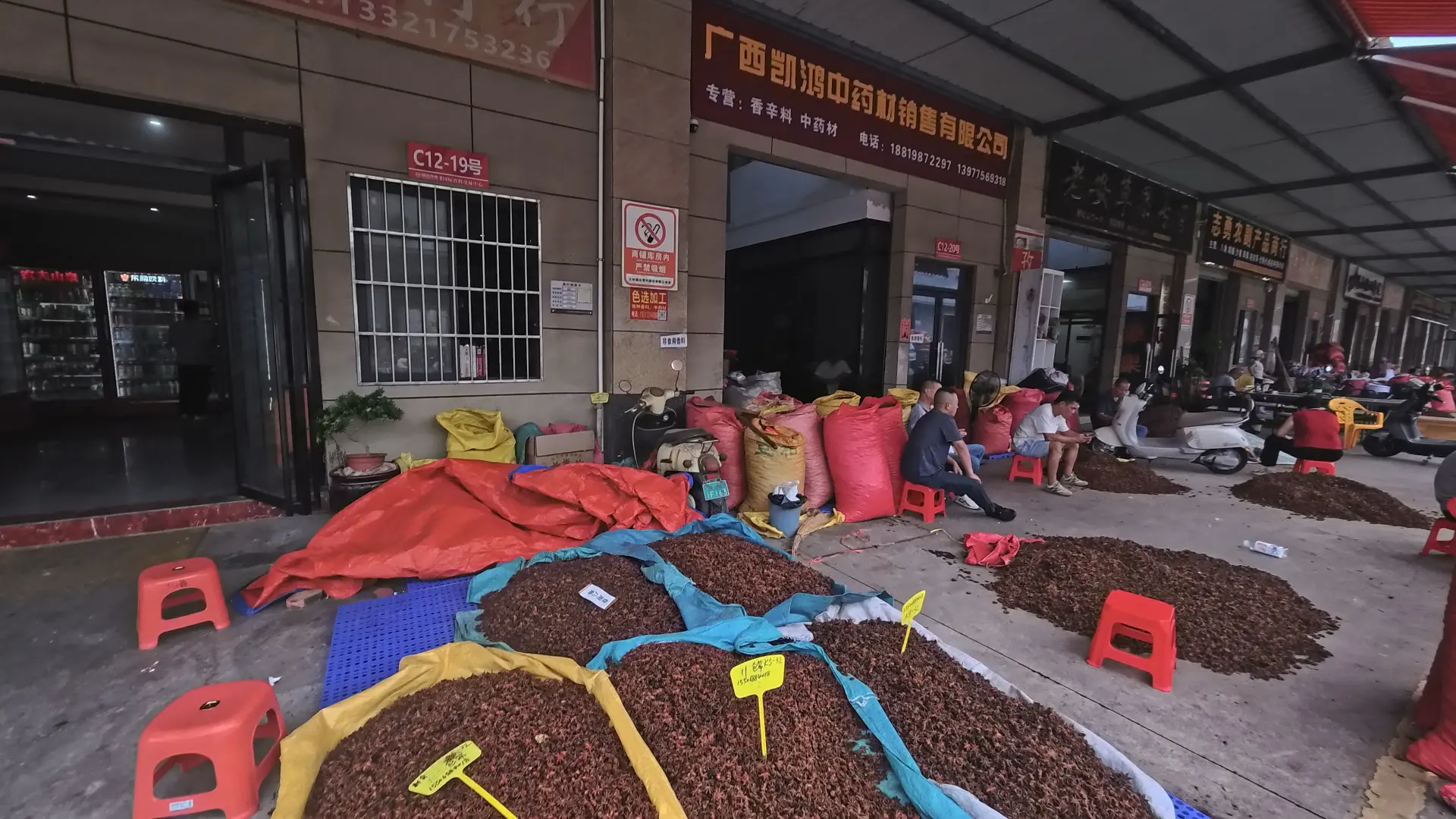
| Origin | Yulin, Baise, Fangchenggang or Wuzhou, Guangxi, depending on the offered lot | Check the supplier record and lot identity |
|---|
| Form | Broken dried fruit | Match the identified sample to the written order |
|---|
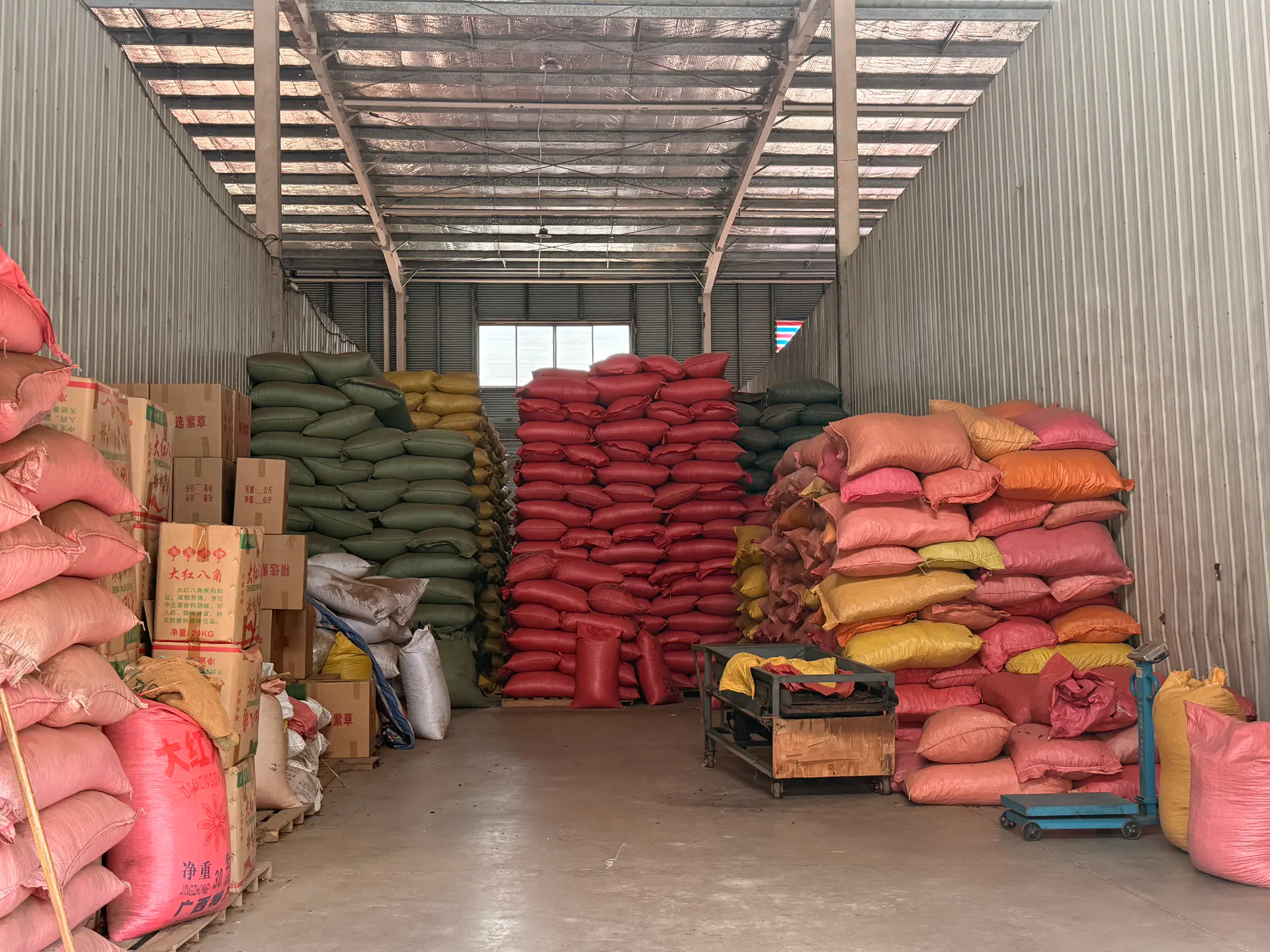
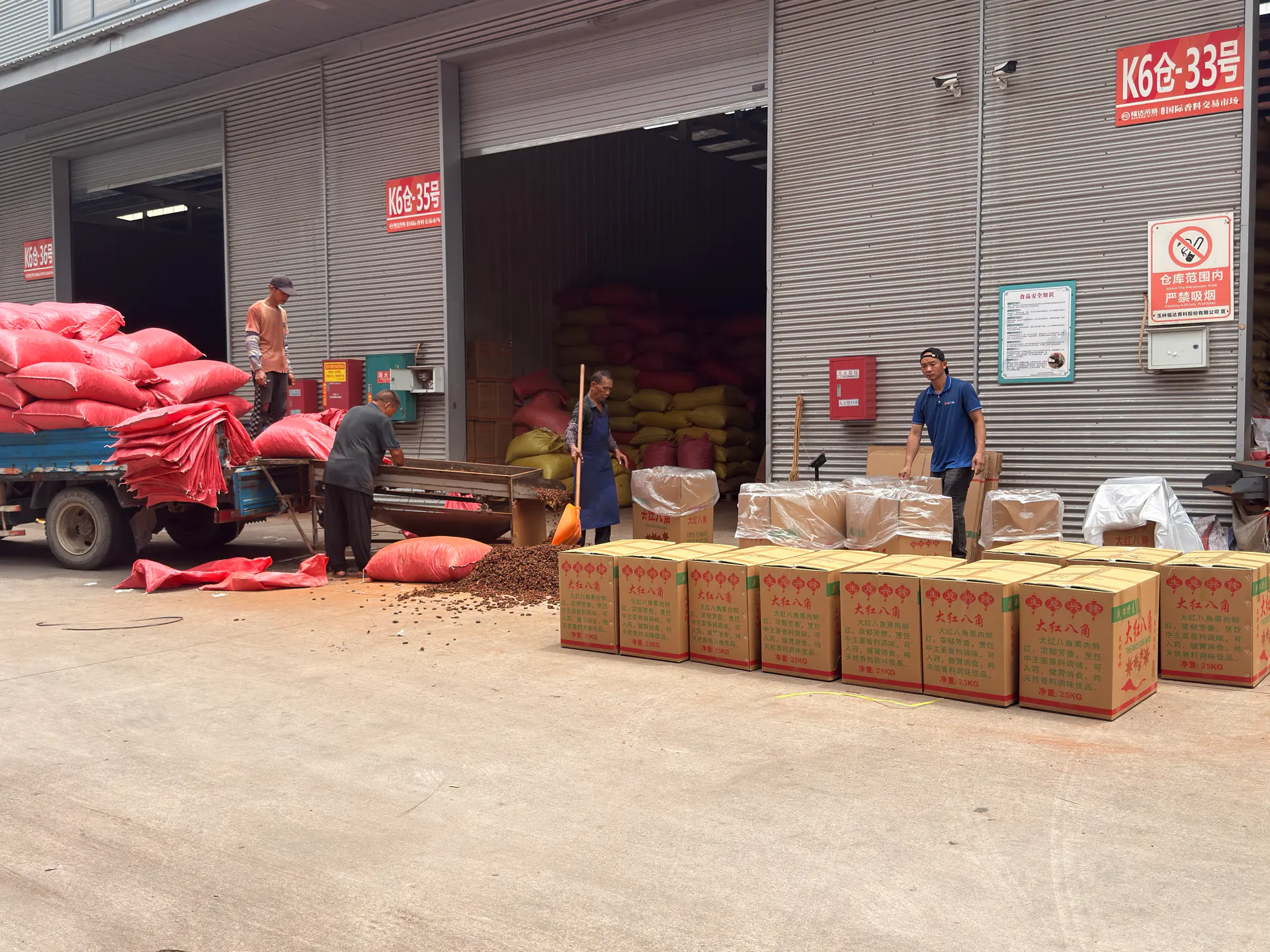
| Packaging | 20 kg lined PP bag; 10 kg, 20 kg or 25 kg alternatives by quotation | Match the packing specification to the packing check |
|---|
Reference values, not results for a specific lot; the agreed specification and your lot’s test decide.
Commercial details
- Botanical name
- Illicium verum Hook. f.
- Origin
- Yulin, Baise, Fangchenggang or Wuzhou, Guangxi, depending on the offered lot
- Form
- Broken dried fruit
- Typical uses
- Grinding · Blending · Food Processing
- Minimum order
- 500 kg
- Packaging
- 20 kg lined PP bag; 10 kg, 20 kg or 25 kg alternatives by quotation
- Shelf life
- Confirmed for the offered product and packing
- Storage
- Store cool, dry and clean; protect from moisture and strong odours.
Buying adviceState the piece-size range, fines and stem limits, the crop if it matters, the sulphur-free requirement and SO₂ limit, moisture, destination tests, packing and quantity.
AssessmentAssess buyer-agreed piece size, moisture, foreign matter and visible condition against the identified sample.
Sample recordSample reference and date, product photographs, inspection checklist and packing photographs.
Technical referencesISO 11178:1995 · GB/T 7652-2016 — current Chinese standard · GB/T 7652-2026 — effective 2026-10-01
How we grade this
Most broken star anise comes from the lobes and pieces separated when whole-star lots are screened and hand-selected, so Kun and Chuangui grade it like the fruit it came from. They squeeze for dryness, look for black, mouldy or scorched pieces and smell deeply for a clean, sweet aroma. They also sieve a sample to check piece size, fines and stems, because dust and fines hide easily in broken material.
What they keep out is dried branch fruit: fruit that fell and dried on the ground, dark and shrivelled, with an impure aroma. It belongs in oil extraction, not in food-grade broken star anise. The laboratory confirms moisture, volatile oil and SO₂, and origin comes from the supply records.
Frequently asked questions about Broken Star Anise
What is broken star anise used for?
Grinding, blending, spice bags and extraction: anywhere the whole star is not seen. It costs less than whole stars of the same crop.
Does broken star anise have less aroma?
A little, and it loses aroma faster once the bag is open. Our reference is at least 7 mL/100 g volatile oil, against 7.5 for whole stars. Keep it sealed and cool.
Can I specify the piece size?
Yes. Give a piece-size range or sieve, a fines limit and a stem limit, and we check the sample against them.
Could branch fruit be mixed in?
Not in our broken star anise. Branch fruit is dark and shrivelled and smells impure; it is traded for oil extraction. Smell the sample: a clean, sweet aroma is what you are paying for.