CUMIN GUIDE

Cumin: Xinjiang, Gansu, India and Türkiye Compared

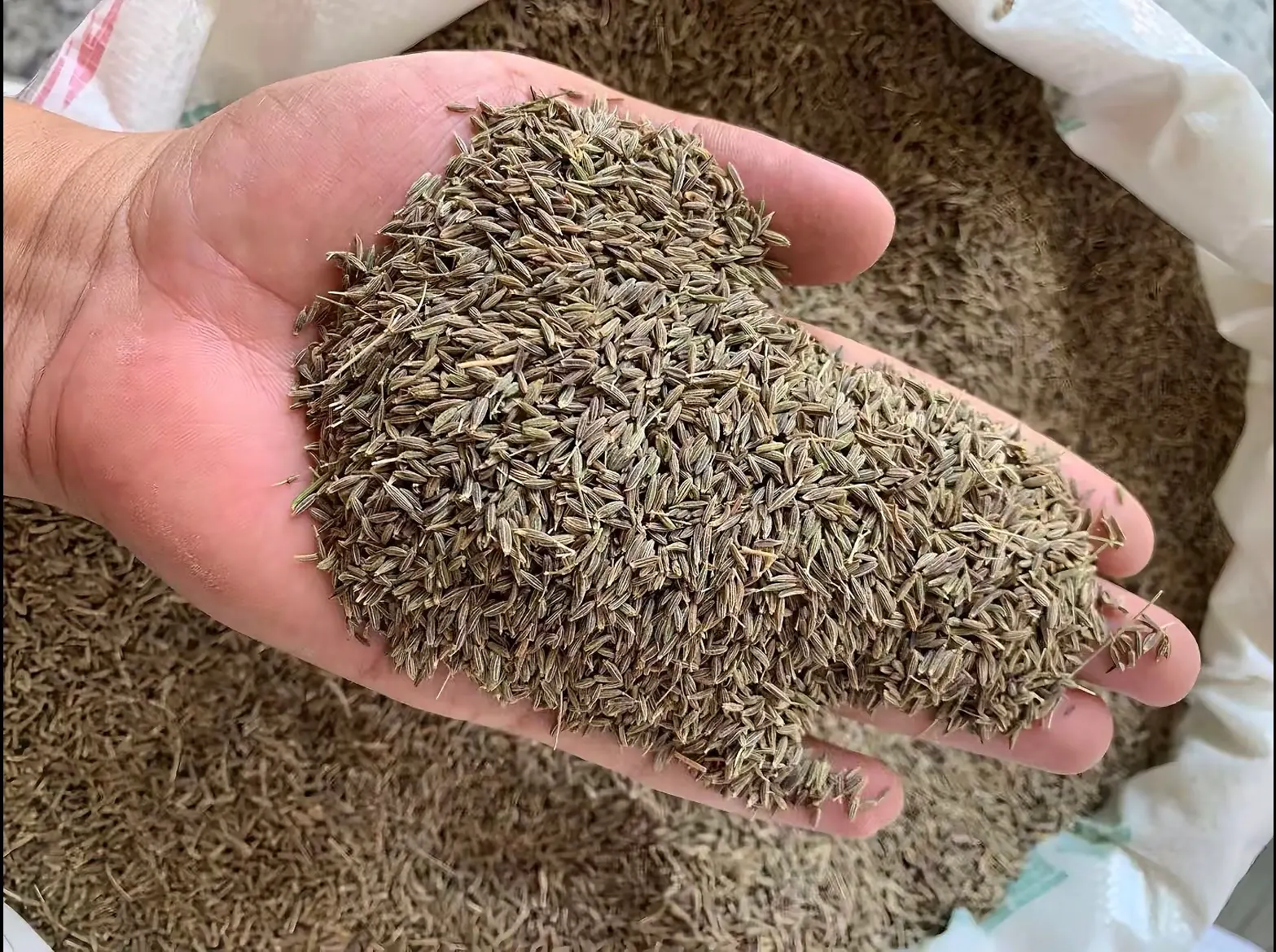
Xinjiang cumin is the largest Chinese seed, blue-grey to green, with a clean toasted-nut aroma. Gansu seed is smaller, yellower and 20–30% cheaper; Indian seed is small, sharp and lowest in price; Turkish cumin is the premium benchmark. New Xinjiang cumin reaches Yulin in August.

By Fu Yang Updated

Whole cumin seeds

PRACTICAL TIPS

Cumin origins at a glance

Cumin origins at a glance
OriginSeed and aromaPosition
Xinjiang (Yuepuhu and Kashgar; Turpan; Bazhou and Aksu)Large, full seed of 4–6 mm, blue-grey to green, with a clean toasted-nut aroma. Volatile oil reported at 3.2–3.8%.China's main origin; suits whole-seed use, grilling and blends.
Gansu (Jiuquan, Zhangye, Wuwei)Smaller, yellowish seed; oil 1.8–2.3%; milder aroma and a clean powder colour.Value foodservice and powder, 20–30% below Xinjiang.
India (Rajasthan, Gujarat)Small seed of 2–4 mm, deep yellow-brown; oil 1.2–2.0%; sharp, herbal aroma with a short finish.The low-price grade.
Türkiye (Anatolia)Medium, even, plump, pale yellow-green seed; oil 3.0–4.2%; layered floral and fruity aroma with a long finish.Premium benchmark, at 1.5–2 times the Xinjiang price.
Iran (Khorasan)Medium, yellow-green seed; oil 2.8–3.5%; strong spice aroma.Value option below Turkish cumin.

Harvest calendar

Cumin is an annual crop. In Xinjiang, Turpan starts in late June and Kashgar and Bazhou harvest through July; the plants are field-dried for 10–15 days, and new cumin reaches Yulin in August. Gansu harvests in late July and early August and reaches the market in late August.

Abroad, India harvests in December and January and sells mainly in February and March. Morocco and Egypt harvest in May and June, Iran in June and July (marketed in August), and Türkiye in July and August (marketed in September). So Indian and North African cumin supply the first half of the year, and China, Türkiye and Iran the second.

Cleaning and grades

Traditionally, whole plants are field-dried for 3–5 days, threshed, winnowed and bagged. That is cheap and keeps a natural aroma, but leaves stalk, dust and hollow seed. Market processing adds air-winnowing, size screens and hand-picking; export lots add optical colour sorting and a second inspection.

China's standard for cumin (GB/T 22267-2017) sets grade 1 at impurities of 1% or less, moisture of 12% or less and volatile oil of at least 2.5%; grade 2 at 2%, 13% and 1.5%; grade 3 at 3%, 13% and 1.0%. In the Yulin market, selected cumin is optically cleaned to 0.5% impurities or less with even size; air-cleaned bulk allows up to 2% and some hollow seed; broken bulk, up to 3%, goes to milling and extraction.

Powder is milled at 45 °C or below after selection, then sieved to 60, 80 or 100–120 mesh. Above about 65 °C, cumin loses volatile oil.

Quick checks on a sample

The checks Kun and Chuangui make first. Origin comes from the records and purity and oil from the laboratory, but these catch most problems early.

Rub

Run a handful through your fingers. Dry seed is crisp and does not stick.

Look

Full seeds with natural colour. Black or dark seed may be old or mouldy; an unnaturally even colour can mean dye; very bright seed may have been treated.

Crush and smell

Clean and spicy is right. Sour, mouldy, sulphur or stale-oil smells are warning signs.

Count ten seeds

Take ten seeds from each of several bags. If three or more are small and dark in a lot sold as Xinjiang, check the origin documents.

Price index, September 2026

Yulin market prices as an index, with Xinjiang air-cleaned bulk = 100; not offers. Xinjiang bulk halved from the 2023 peak to 2024, then recovered about 10–15% in 2025. Because cumin is an annual crop, growers switch quickly and prices swing within one or two years.

Xinjiang bulk, air-cleaned

100

Xinjiang large seed, optically selected

about 110

Xinjiang powder, sulphur-free, 80 mesh

about 120

Gansu bulk

about 80

Indian FAQ, landed

about 95

Turkish premium, landed

about 180

QUICK CHECK

For a cumin enquiry

  • Origin: Xinjiang, Gansu or another stated origin
  • Selected (optically sorted) or bulk
  • Impurity and hollow-seed limits
  • Minimum volatile oil
  • Moisture limit and destination tests
  • Packing, quantity and destination

Origins, prices and grades here come from our team's trading in Yulin and are dated; volatile-oil figures are reported ranges, not tests on your lot.

BUYER QUESTIONS

Frequently asked questions

Which cumin do you supply?

Mainly Xinjiang cumin; Inner Mongolia or Gansu can apply to an offered lot. The origin is stated with the quotation and confirmed by the supply records.

Why does the cumin price move so much?

Cumin is an annual crop, so growers plant more after a good year and less after a bad one, and remote fields are left unharvested when prices fall. Weather in India, the largest producer, also moves world prices.

Is cumin the same as fennel or caraway?

No. Cumin is Cuminum cyminum. Fennel (Foeniculum vulgare) and caraway are different plants with different aromas; put the botanical name in your specification.

Can you supply ground cumin?

Yes, through a processing partner: milled at 45 °C or below and sieved to your mesh. In Yulin, powder trades about 15% above whole seed.