
Cinnamon coffee
Combine 1/8 teaspoon ground cassia with 18 g ground coffee, then brew with about 250 ml water. Do not sprinkle a large dry dose onto the finished drink, where it can float and clump.
GROUND CASSIA · CULINARY GUIDE
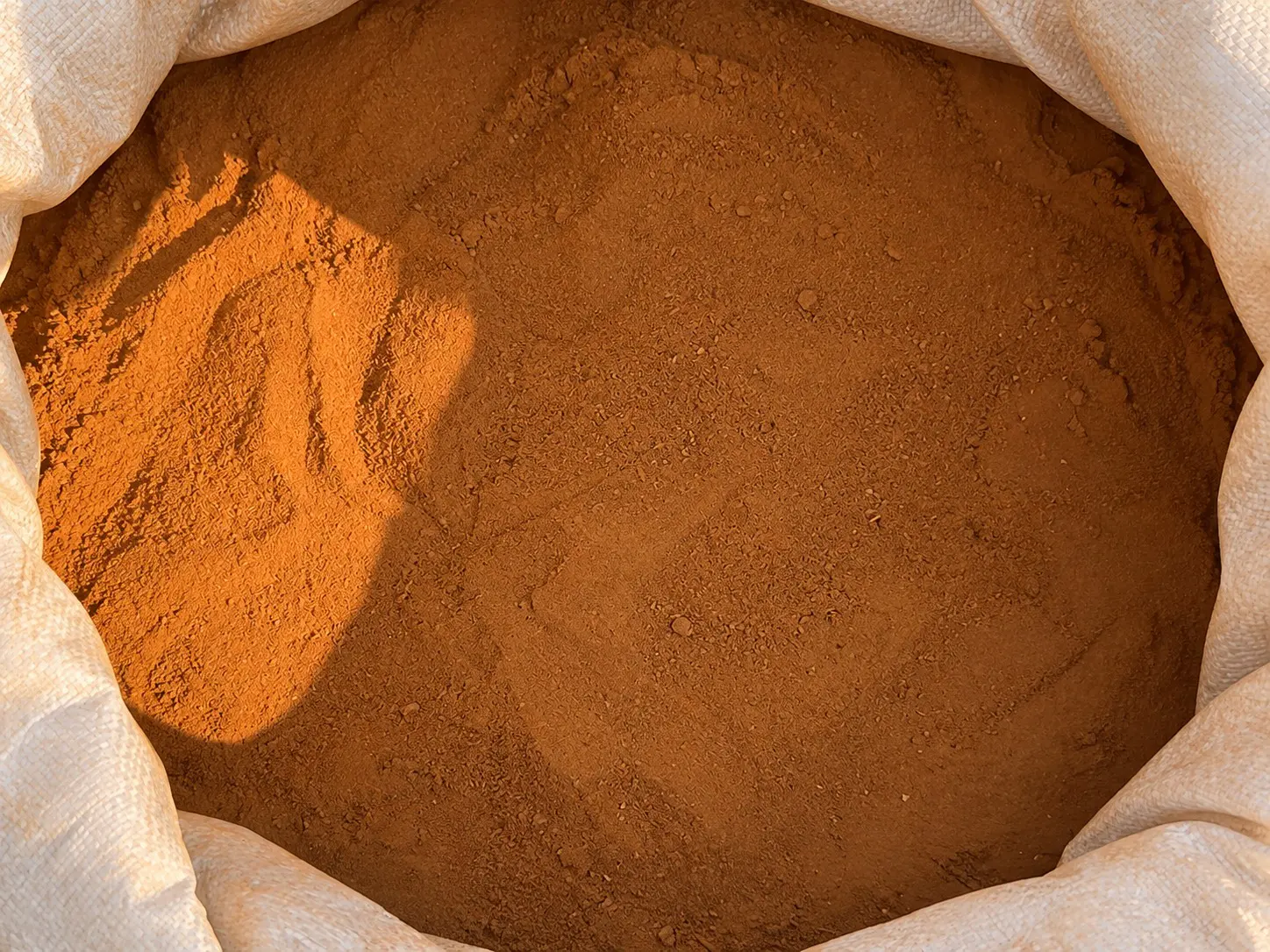
Ground Chinese cassia brings a warm, strong cinnamon profile to coffee, bakery products, hot chocolate, fruit, savoury dishes and seasonal drinks. These small-batch recipes help professional buyers test flavour before agreeing particle size, packing and a 500 kg B2B order.
By Fu Yang Updated
PRACTICAL TIPS
| Application | Starter amount | How to use it |
|---|---|---|
| Filter coffee | 1/8 tsp with 18 g coffee for about 250 ml water. | Mix with the grounds before brewing for even extraction. |
| Hot chocolate | 1/4 tsp for 500 ml milk and 80 g dark chocolate. | Whisk into the warm milk before adding chocolate. |
| Cakes and bakery | Start near 1 tsp for a small 150 g-flour cake. | Disperse with the dry ingredients and run a sensory trial. |
| Fruit, oats and breakfast | Start with 1/4 tsp for four portions. | Add early for cooked fruit or late for a fresher aroma. |
| Savoury cooking | Start with 1/4 tsp for four portions. | Use as a background spice with cumin, tomato or pulses. |
| Mulled wine and hot drinks | Start with 1/4 tsp for a 750 ml batch. | Contain powder in a filter bag; sticks or cuts give a clearer drink. |
Combine 1/8 teaspoon ground cassia with 18 g ground coffee, then brew with about 250 ml water. Do not sprinkle a large dry dose onto the finished drink, where it can float and clump.
Warm 500 ml milk without boiling. Whisk in 1/4 teaspoon ground cassia, add 80 g chopped dark chocolate and stir until smooth.
Mix 150 g flour, 1 teaspoon baking powder and 1 teaspoon ground cassia. Beat 100 g softened butter with 100 g sugar, then add 2 eggs and 100 g yoghurt. Fold in the dry ingredients and bake at 175°C for about 30 minutes, checking doneness before serving.
Simmer 80 g oats, 500 ml milk or water, one diced apple and 1/4 teaspoon ground cassia until the oats are cooked.
Cook four peeled, chopped apples with 60 ml water and 1/4 teaspoon ground cassia until soft; sweeten only if needed.
Soften one chopped onion, add 400 g drained chickpeas, 400 g tomatoes, cumin and 1/4 teaspoon ground cassia, then simmer for about 20 minutes.
For a small adult-beverage trial, combine 750 ml red wine, strips of orange peel, sugar to taste and 1/4 teaspoon ground cassia enclosed in a paper tea filter. Heat gently for about 15 minutes without boiling, remove the filter and strain before serving. The same flavour trial can be made alcohol-free with apple or grape juice.
Powder gives fast flavour release but can leave sediment. Cassia sticks or measured cuts are often easier to remove from clear seasonal drinks. Commercial alcoholic beverages must follow licensing, labelling and destination-market rules.
The same cassia powder can be packed for food manufacturers, wholesalers, bakeries, cafés, hotels and restaurants, but the required fineness and pack are not automatically the same. Record the recipe, dosage, mixing method and sensory result, then define sieve aperture or mesh standard, percentage passing, treatment, unit weight, label and case configuration.
These are formulation starters, not finished commercial recipes. Scale only after sensory, process, shelf-life and regulatory review.
Chinese cassia is generally stronger than Ceylon cinnamon and may contain more coumarin. The European Union sets category-specific maximum levels for coumarin in certain foods containing cinnamon. There is no single recipe dose that proves compliance for every product.
The food manufacturer is responsible for the final formulation, serving size, labelling and destination-market compliance. This guide makes no health claim and does not replace product-specific testing or professional advice.
QUICK CHECK
Starter recipes are for product development, not health or medical advice. Final food and beverage compliance remains with the manufacturer.
BUYER QUESTIONS
Yes. For a small filter-coffee trial, mix about 1/8 teaspoon with 18 g coffee before brewing. Test a lower or higher level against the roast and serving size.
Powder releases flavour quickly but can create sediment. Sticks or measured cuts are easier to remove when a clear drink is important.
Not necessarily. Flow, dispersion and mouthfeel depend on the process. State the sieve standard, aperture or mesh and percentage passing after a production trial.
No. They are small-batch development starters. The manufacturer must validate ingredients, dosage, process, shelf life, labelling and applicable destination rules.